When I was younger, I thought healthy aging was mostly about avoiding illness.
Now that I’m in this stage of life, I’ve realized it’s about something much bigger.
It’s about having the energy to enjoy life.
It’s about being able to think clearly, move comfortably, handle stress better, and feel like yourself even during major transitions.
The good news is that healthy aging doesn’t usually come from one dramatic change.
Most of the time, it comes from small habits practiced consistently over time.
Here are 10 simple habits that can support healthy aging and help you feel more like yourself in this season of life.
1. Prioritize Sleep Like It Actually Matters
For years, I treated sleep as something I could catch up on later.
What I’ve learned is that poor sleep affects almost everything:
- mood
- focus
- energy
- memory
- stress levels
- motivation
One thing that surprised me personally was learning that sleep can affect blood sugar levels as well.
As I started paying closer attention to my health, I noticed my morning blood sugar readings were often higher after nights when I hadn’t slept well. That led me to learn more about the connection between sleep, stress hormones such as cortisol, and blood sugar regulation.
I’m not a medical professional, and this isn’t medical advice, but it was a reminder that sleep isn’t just about feeling rested. It affects many systems throughout the body.
If you’re struggling with brain fog, low energy, or feeling emotionally overwhelmed, improving your sleep may be one of the most powerful places to start.
2. Walk More Than You Think You Need To
Walking doesn’t get nearly as much attention as complicated fitness programs.
But it may be one of the simplest ways to support:
- heart health
- mobility
- stress reduction
- blood sugar management
- mental clarity
You don’t have to train for a marathon.
A daily walk around the neighborhood can make a meaningful difference.
3. Drink More Water Than You Think You Need
This one sounds simple because it is.
Yet dehydration can contribute to:
- fatigue
- headaches
- brain fog
- poor concentration
A common guideline for women is approximately 91 ounces (about 11.5 cups) of fluids daily from beverages and food combined, although individual needs vary.
Another interesting thing I’ve learned is that by the time we actually feel thirsty, we may already be mildly dehydrated.
That’s one reason I try to sip water consistently throughout the day instead of waiting until I’m thirsty.
Many women discover they feel significantly better when they consistently drink enough water.
4. Create Quiet Time Before Creating More Noise
It’s easy to begin the day immediately consuming information.
Emails.
News.
Social media.
Videos.
Sometimes the healthiest thing we can do is spend a few minutes with our own thoughts before inviting everyone else’s opinions into our day.
Even ten minutes of quiet reflection can change how the entire day feels.
Try asking yourself:
- What is one thing I want to focus on today?
- What can I let go of today?
- What am I grateful for right now?
- What would make today feel successful?
Or try a simple affirmation:
- I don’t have to have everything figured out today.
- I can take one step at a time.
- I trust myself to make thoughtful decisions.
- I am creating a life that fits who I am now.
Those few quiet minutes can often set the tone for the entire day.
5. Strengthen Your Muscles, Not Just Your Cardio
As we age, maintaining strength becomes increasingly important.
Strength supports:
- balance
- mobility
- independence
- confidence
This doesn’t require hours in a gym.
Simple bodyweight exercises, resistance bands, or light strength training can be a great place to begin.
6. Pay Attention to What Gives You Energy
Not everything that drains us is physical.
Some activities leave us feeling energized.
Others leave us feeling depleted.
Pay attention to:
- people
- commitments
- routines
- environments
Healthy aging isn’t only about nutrition and exercise.
It’s also about protecting your emotional energy.
7. Include More Protein and Whole Foods
I won’t pretend nutrition has to be perfect.
But I’ve learned that what we eat affects far more than our weight.
It impacts:
- energy
- focus
- blood sugar
- mood
- recovery
One of the easiest places to start is breakfast.
Some simple protein-rich options include:
- Greek yogurt with berries and nuts
- Cottage cheese and fruit
- Eggs with vegetables
- A protein smoothie
- Chia pudding with added protein powder
- Nut butter on whole-grain toast
- Tofu scramble
- Overnight oats with added protein powder
One habit I’ve incorporated is adding a blend of:
- 1 tablespoon ground almonds
- 1 tablespoon pumpkin seeds
- 1 tablespoon raw organic cacao powder
to my morning coffee or smoothie.
I originally started doing this because of the magnesium content, but it also adds healthy fats, fiber, antioxidants, and a little extra protein to start the day.
Again, this isn’t medical advice—just one simple habit I’ve personally enjoyed.
8. Keep Learning New Things
One of the most exciting parts of this stage of life has been discovering new tools, technologies, and ways of thinking.
Learning keeps us engaged.
It challenges our brains.
And it reminds us that growth doesn’t stop simply because we reach a certain age.
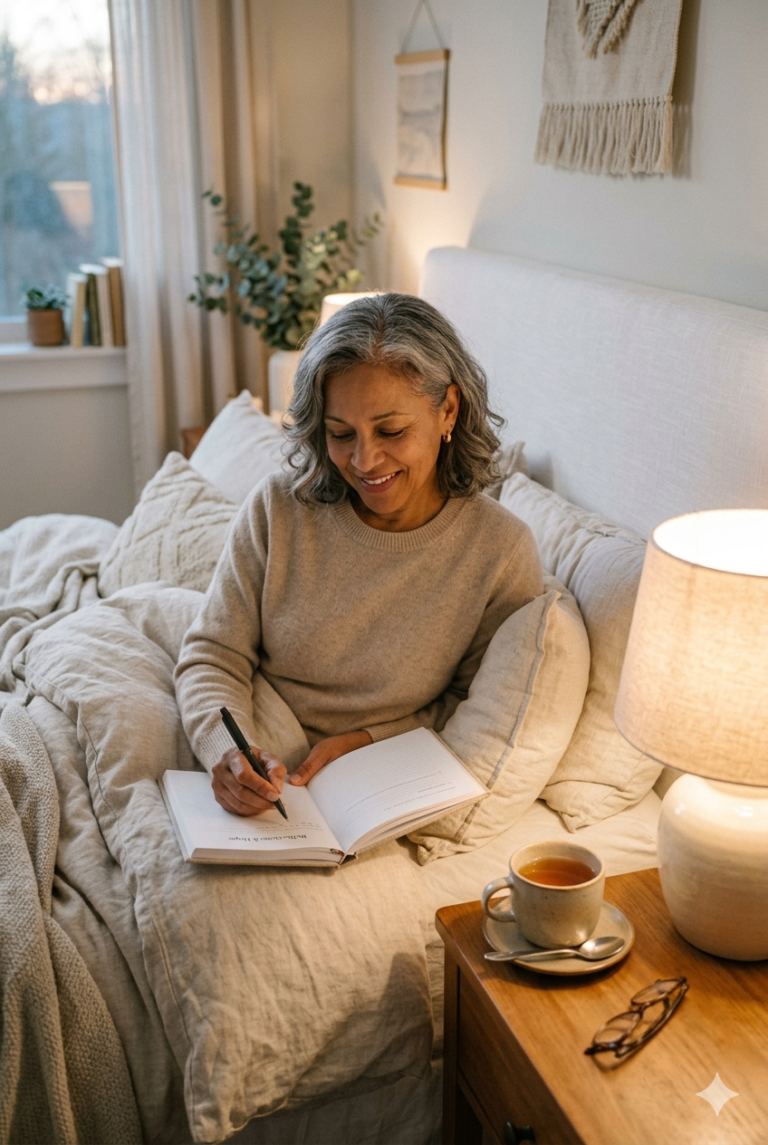
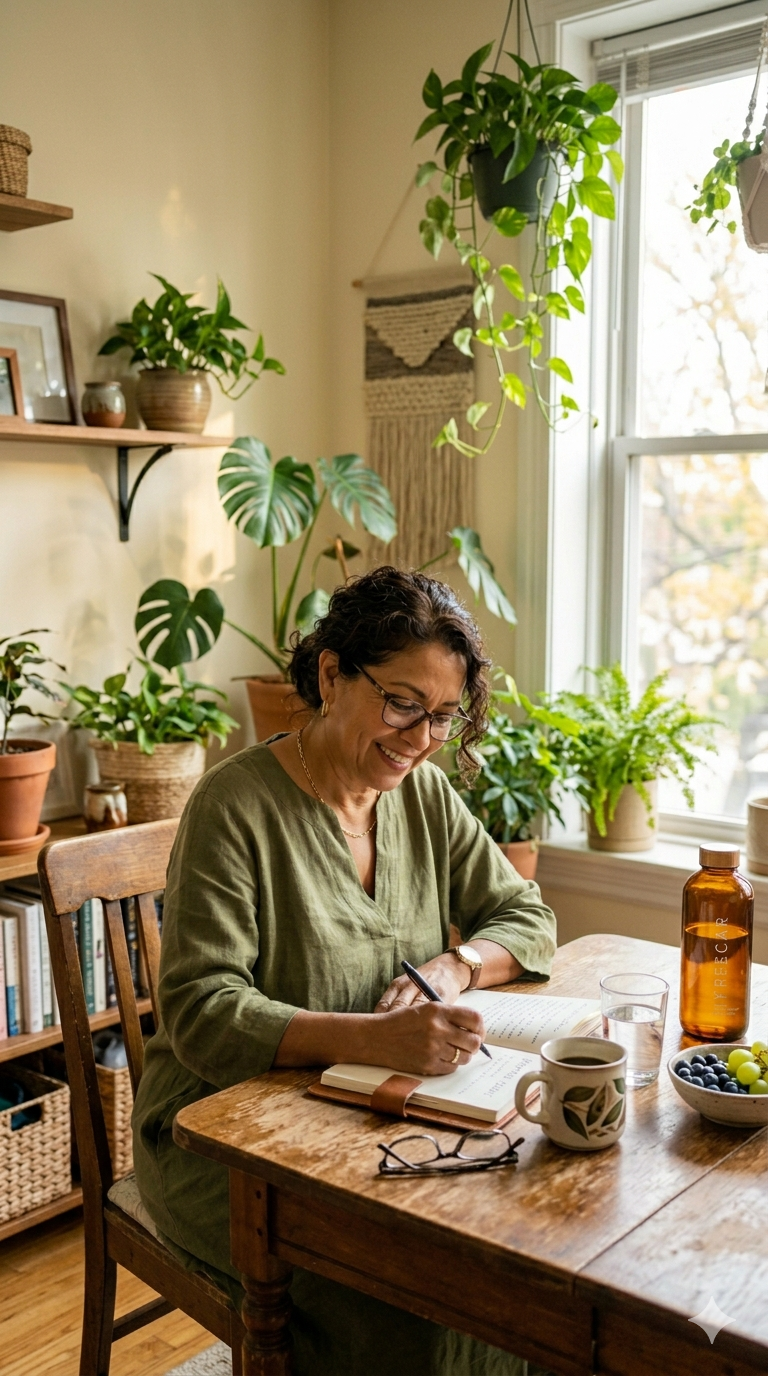
9. Journal Your Thoughts Instead of Carrying Them
Many women spend years managing responsibilities, solving problems, and caring for others.
Eventually those thoughts need somewhere to go.
Journaling helps me:
- process emotions
- gain clarity
- recognize patterns
- reduce mental clutter
Sometimes seeing your thoughts on paper makes them easier to understand.
10. Create Something That Feels Meaningful
Healthy aging isn’t only about preventing problems.
It’s also about creating purpose.
That might mean:
- volunteering
- gardening
- creating art
- starting a blog
- learning a skill
- building a business
- helping others
Purpose gives us something to move toward.
And that matters.
Healthy Aging Is Really About Supporting the Life You Want to Live
One reason I enjoy talking about wellness is because I don’t see it as separate from confidence, reinvention, or creating a meaningful next chapter.
They’re connected.
It’s much easier to pursue new goals when:
- your energy improves
- your mind feels clearer
- your stress feels more manageable
- and you’re taking care of yourself consistently
None of these habits need to be perfect.
Pick one.
Start there.
Then build from that foundation.
Ready to Build More Confidence in This Next Chapter?
If you’ve been feeling stuck, overwhelmed, or disconnected from yourself during this stage of life, the Midlife Confidence Reset was created to help you:
- rebuild self-trust
- gain clarity
- develop healthier thought patterns
- reconnect with your goals
- move forward with more confidence
Because confidence isn’t built through motivation alone.
It’s built through the small choices we make every day.
Explore the Midlife Confidence Reset →
Final Thoughts
I’ve learned that healthy aging isn’t about trying to become the person I was twenty years ago.
It’s about becoming the healthiest, strongest, and most grounded version of who I am today.
And honestly, I think that’s a much better goal.